


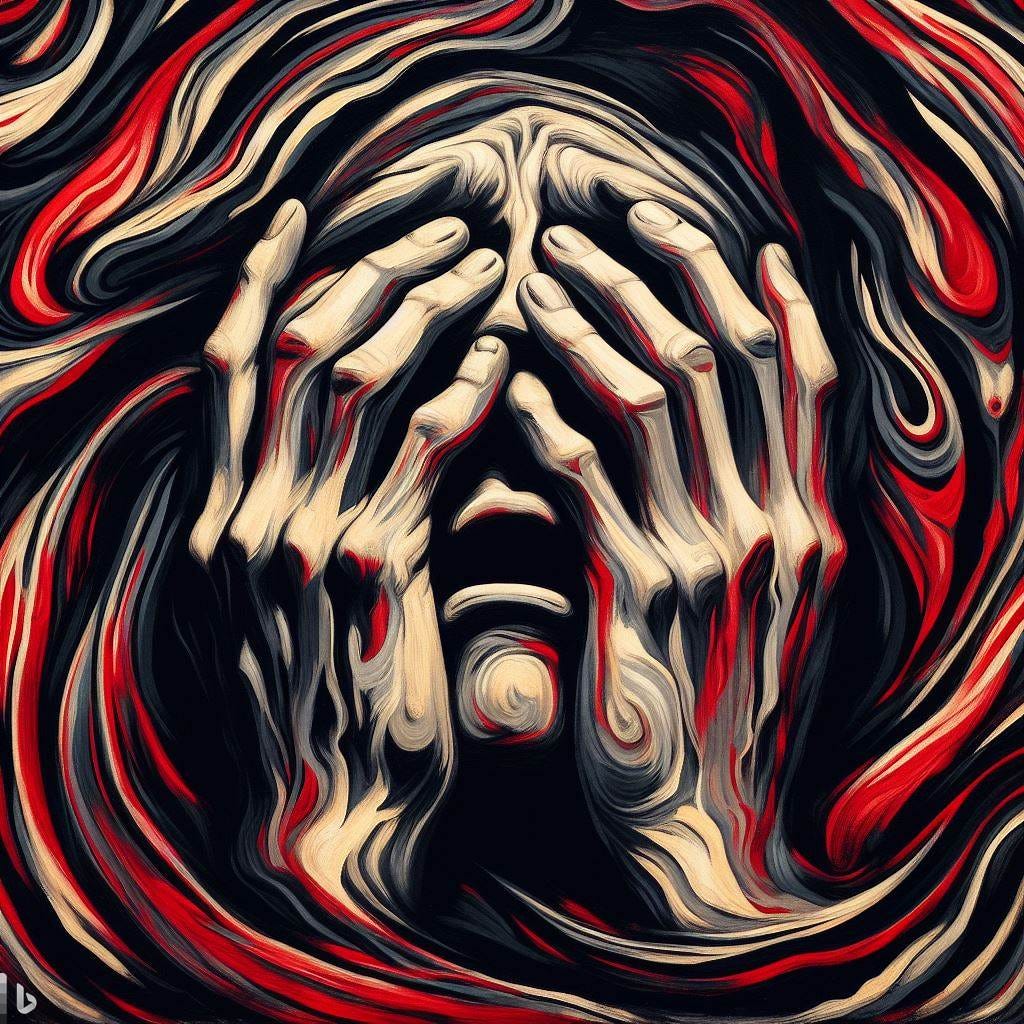
When you step into the world of discussions and debates which arise in relation to the ‘problem’ of evil, you are confronted with a dizzying array of responses and possible 'solutions'.
A useful guide to finding your way through the maze of what is on offer was outlined by Arthur L. Herman in his book The Problem of Evil and Indian Thought (Delhi, Motilal Banarsidass, 1976). In this post, I will outline what these are and what they mean.
My hope is they will act as a signpost or map for our own discussions about evil which will follow in this section of the site.
1. Aesthetic Solution
The aesthetic whole is good though the parts are evil. An analogy would be a painting; the brush strokes use all sorts of colours, some light, some pastoral and some dark and murky. Individually they make little sense. When seen in the context of their place within the picture as a whole, however, they all have a role to play. Likewise, good and evil have a role to play in the overall picture of the world and of the universe.
2. Teleological Solution
Good comes ultimately out of evil. Although random acts of evil appear to make no sense, their occurrence is part of a longer process out of which good things come. Without them, the emergence of goodness would not be possible.
3. Prevention Solution
The evils we have are necessary to prevent greater evil. We often speak of choosing the ‘lesser’ of two evils. This solution proposes, for example, that taking the life of a serial killer may be seen as evil in that it involves the taking of a life, but by doing so it prevents the serial killer from taking even more lives.
4. Contrast Solution
Evils are necessary in order to contrast with and point up the good. How can we do good things unless evil things exist? It would make being good meaningless if there were no evil to contrast with it.
5. Humans Are Free Solution
This is the ‘traditional’ solution to the problem of evil. Evil exists because human beings are free to choose to do or not to do any action at any given time, without coercion or influence. It is usually referred to as ‘the free will defence’.
6. Discipline Solution
Evil disciplines us and builds our character. This is sometimes referred to as the ‘soul-making’ or the ‘person-making’ solution. The purpose of life is to fashion human beings who are given the chance to grow to become good persons. Evil is a ‘tool’ for educating us about personhood.
7. Recompense Solution
Evils, sometimes called ‘unjust suffering’, will be recompensed in Heaven. Your suffering and pain whilst alive will be compensated by the joy and happiness you will find in the next life.
8. Illusion Solution
Evil is an illusion, and not ultimately real. This solution seems counter-intuitive. Of course evil is real - I suffer it here, now, as a powerful experience. Yet how often do we hear people speak in terms of how what looked like something negative and awful actually turned out to be a ‘blessing in disguise’? You could also call this the hindsight solution.
9. Privation Solution
Evil is merely the privation of good. This comes from a tradition of theology and philosophy stemming from Augustine. Evil isn’t described in positive terms but purely in negative terms. Evil is no thing. Illness is an absence of health. Death is an absence of life.
10. Impersonal Substance Solution
Evil is caused by an impersonal, wicked substance, e.g., matter. We often take evil personally - as something intended or directed toward us. This solution asks us to think of evil in non-personal terms. Also called ‘natural evils’, these refer to things like earthquakes, typhoons, hurricanes, diseases, pandemics, aging and death.
11. Personal Substance Solution
Evil is caused by a personal wicked substance. Usually, this is attributed to the figure of Satan, for example, or demons, poltergeists and other supernatural agents.
12. Justice Solution
Evil is God's just punishment for sin and wrong-doing. Much like breaking the law, what we call evil is actually just punishment for the wrong which has been committed.
13. Necessary Solution
Evil is metaphysically and logically necessary for the existence of good. This comes close to what we have already called an ‘educational’ solution to evil. For example, the existence of rabies is necessary in order to inspire us to increase and advance our knowledge of medicine to find a cure. For this to happen, it cannot be a ‘one-ff’; it has to occur again and again so as to grow the knowledge needed to overcome it.
14. Worse Alternatives Solution
God hates evil but approves of what we get, for the alternatives are far worse. Pain, for example, could be construed as being evil. God hates the pain that we suffer but, by creating creatures who pass out and become unconscious once a certain threshold is reached, there is a built-in limit to the limitless agonies we could experience.

15. Creator Limitation Solution
The evil we have is the result of God's choices being limited at the time of creation. By creating a world where life becomes possible, the creator is limited by the natural laws which operate to keep that world working.
16. Metaphor Solution
The language describing God is merely metaphorical. Language is all we have to describe the world, our experiences and God. It is necessarily limited, inadequate and lacking in its ability to describe God, good and evil. Talking about evil isn’t literal; rather it is poetic, metaphorical, analogous.
17. Outweighs Solution
Evil is not so bad for the good in the world always outweighs the evil. This is a quantification/balance solution. It says that when confronted by the evil and suffering in the world, we need to remember that instances of goodness are greater in number and frequency and therefore the instance of good outweighs the amount of evil.
18. Rebirth Solution
This solution closely resembles the idea of reincarnation. As a consequence of the things done in our previous lives, we are the cause of evil and are responsible for evil.
19. Metaphysical Evil Solution
Evil in creation is caused by imperfections in the creation itself. These could be random events, chance, deformities, etc.
20. Not All-powerful Solution
God is not omnipotent and needs help in combating evil. In many ways, this reflects the solution already outlined in Solution 15. Essentially it is saying that in creating a world where life can grow and evolve, the creator has to respect the laws and limits which operate in that world.
21. Mystery Solution
The presence of evil cannot be rationally justified (one must give up reason, have faith, see the mystery in evil, etc.) This is often known as the ‘faith solution’. The human mind can only grasp so much. There will always be things which lie beyond our understanding. Evil is one of them.
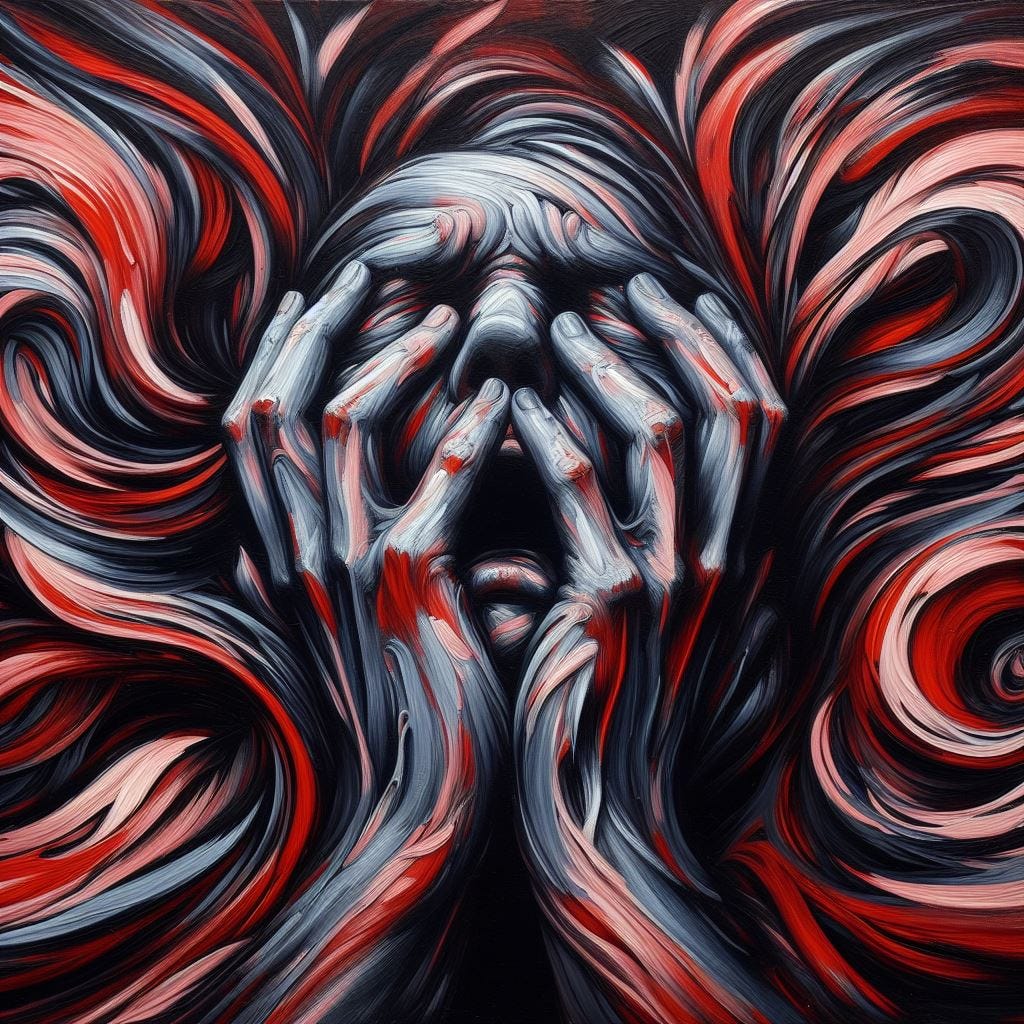
I hope this brief tour has been interesting as well as useful. When considering the views you come across when thinking about evil, it is always a good idea to be able to try and spot which type of solution is being offered. There are, of course, others not mentioned here - but doubtless we will, at some point, come across these as we take our own conversations further.
It appears, in many ways, that 'evil' is subjective to perspective. What if there is no 'solution' to the problem of evil? Perhaps evil is an actual force that exists outside of perspective or POV. Is this even possible? Perhaps it is a dark energy current which, when engaged, reflects to those perceiving that actions are 'evil' - when in fact is it a physical phenomena, a force in itself that we don't clearly understand. I found the etymology interesting - https://www.etymonline.com/word/evil
Hi there! Great beginning to the conversation about evil. I want to start with just one bit of push back on one of your statements: "It would make being good meaningless if there were no evil to contrast with it."
I don't believe this to be true.
First, it's binary thinking. There is much more to existence than the two extremes.
Secondly, this seems to assume that the existence of either good or evil depends on there being an awareness which can contrast/compare them. Good and/or evil's existence doesn't depend on an outside awareness of thir existence.
Third and finally (though there is always more to discuss), good would still exist if evil did not. There is no necessary connection between the two - good does not require an evil against which to resist or counter. Good would/can be just, simply good.
:-)